
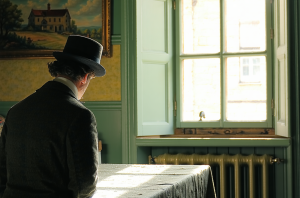
Great Expectations
By Charles Dickens
Introduction
The following is part of a series exploring classic books for people who always meant to read them, but never quite got around to it.
Welcome. Let’s step into the world of Great Expectations, one of the most beloved novels by Charles Dickens. First published in 1861, this tale is filled with colorful characters and suspenseful twists set against the backdrop of Victorian England. Dickens, often called the greatest novelist of his age, crafted stories with unforgettable people – and nowhere is that more true than here.
Great Expectations is at heart a coming-of-age story. Through the eyes of young Pip, an orphan boy with modest beginnings, we are swept across a landscape of hope and disappointment, generosity and heartbreak. The world Dickens describes is one shaped by rigid class lines, old grudges, and sudden turns of fortune. He pulls us close to Pip’s dreams and failures, letting us feel the laughter and the loneliness, the ambition and the aching for love.
Why does Great Expectations still matter? In part, it is because Dickens asks those questions people ponder throughout their lives: “Who am I?” and “Who do I hope to become?” Pip faces pressures to fit an ideal, to chase wealth, and to live honorably – and often, he stumbles. That search for a meaningful place in the world, the struggle to do right, still rings true. Dickens’ skill lies in his ability to hold a mirror up to human nature, revealing even our foolish dreams in a light that is both honest and kind.
You can imagine the story as a journey – not just across foggy marshes and bustling London streets, but through the deep chambers of longing and regret. What is it that gives a life value? How much do our earliest experiences shape who we become? At its core, Great Expectations is about striving, loving, losing, and above all, growing wiser – sometimes painfully so.
Stay with me, as we walk alongside Pip from the humble beginnings of his childhood to the bittersweet revelations of his adult life. Along the way, you’ll meet a cast of unforgettable personalities – and perhaps, recognize something of your own hopes and memories reflected back.
There’s a secret at the heart of Pip’s journey, and a promise that what you expect from life might change entirely. Let’s find out together what waits at the end of those great expectations.
Story Summary
Imagine a cold, gray morning in the flat marsh country of southeast England. Young Pip – whose full name is Philip Pirrip – is visiting his family’s graves, a lonely boy wrapped in the chill of early loss. His parents are long gone, and he lives with his strict elder sister and her husband, Joe Gargery, the village blacksmith. In this place, with the mists rolling across the marshes, Pip’s world feels small… until something startling happens.
On that unforgettable morning, as seven-year-old Pip stands alone, he encounters a terrifying stranger: an escaped convict desperate for food and a file to saw off his iron leg-shackles. The convict, Magwitch, grabs Pip, threatening him into silence. Pip, trembling but compassionate, sneaks bread and a file from home back to the convict. This act of kindness is the first key, unlocking a chain of events that neither Pip nor the reader see coming.
For Pip, life in his sister’s home is tough. Mrs. Joe is harsh and quick-tempered. Joe Gargery, on the other hand, is gentle and quiet. Their home, though lacking in comfort, is kept together by Joe’s simple goodness. Pip’s closest friend, even as a child, is Joe, someone he will come to love dearly for his warmth and decency.
Pip’s days are turned upside down when he is summoned to the grand, decaying mansion of Miss Havisham. Rumor shrouds this reclusive widow, who has not left her house, Satis House, in years. Miss Havisham is a figure frozen in time – forever dressed in her faded wedding gown, surrounded by clocks stopped at one minute to nine. Her house is lit with the gloomy memory of heartbreak, her wedding feast left to rot. “What have I done!” she moans to herself, “What have I done!” The reason becomes clear to Pip and, gradually, to us.
At Satis House, Pip meets Estella – Miss Havisham’s beautiful, proud adopted daughter. Estella has been raised by Miss Havisham to break men’s hearts as revenge for her own jilting at the altar decades earlier. Pip falls desperately in love with Estella, despite her cold treatment and frequently wounded pride. “He calls the knaves Jacks, this boy!” Estella taunts Pip – and in that moment, Pip is painfully aware of his lowly beginnings and awkward ways.
The visits to Miss Havisham awaken in Pip a new shame about his simple life. He feels keenly the gulf between himself and the world of elegance he glimpses through Estella. After each visit, he returns home feeling smaller and more troubled. Yet, in these moments, the core of Dickens’s message emerges. Pip’s disappointment with his own status, his longing to be “a gentleman,” drives the whole story.
As Pip grows, so too does his ambition. He apprentices with Joe as a blacksmith, his future seemingly settled by honest labor. But Pip’s heart is elsewhere. His dreams rest not with the forge, but with winning Estella’s approval. The sharp contrast between Joe’s humble wisdom and the ambition Miss Havisham ignites lingers in Pip’s mind. Joe tells Pip, simply, “life is made of ever so many partings welded together.”
Suddenly, Pip’s fate twists again. A London lawyer named Jaggers arrives from the city with startling news. Pip, he says, has “great expectations” – a mysterious benefactor has supplied funds for Pip to become a gentleman in London. The benefactor’s name, Jaggers insists, must remain secret for now. Pip is swept away by a new chapter: clothes, speech, manners, all must be transformed. He leaves behind Joe, Biddy (his kindly friend from childhood), and the honest village life, chasing a brighter future in the city.
In London, Pip’s world opens wide. He lodges with Herbert Pocket, a cheerful, practical young man who shows Pip the ropes – how to eat, dress, and move in new circles. Pip is introduced to the rituals of finery, the pressures of debt, and the competitive ambitions of Victorian society. His friendship with Herbert offers him steadiness in the swirling chaos of city life. Herbert dreams, too, though less of fortune than of a good, dependable living.
Jaggers, Pip’s guardian, is a powerful if intimidating presence. He is a brilliant criminal lawyer, with a fearsome reputation for winning cases and a manner that is as cold as steel. Around Jaggers dance a cast of London characters, from his clerk Wemmick, who delights in the safety and whimsy of his “castle” of a home, to the cynical and bitter Bentley Drummle, a young man of means whom Pip both envies and despises.
Yet wealth and society bring Pip little happiness. He becomes, in many ways, lost to himself. The more Pip learns about polite society, the further he drifts from the simplicity and decency of his roots. His visits back to the village become awkward, clouded by a sense of embarrassment. The relationship with Joe, once easy and loving, grows tense. Joe remains humble and kind, but Pip cannot shake his shame or longing for something higher. He sometimes reflects, “If I could have kept him away by paying money, I certainly would have paid money.” It is one of many moments where Dickens shows us how striving for status can distance us from those who love us best.
Meanwhile, Estella’s presence haunts Pip still. She, too, has moved to London, and Pip sees her amid the city’s grand parties and gatherings. Estella is grown into a beautiful young woman, yet remains emotionally distant, warning Pip that she cannot love him. Despite all warnings, Pip’s admiration turns to obsession, blinding him to Estella’s inability – or perhaps refusal – to return his affection.
Behind the elegance of balls and British high society, shadows from Pip’s past re-emerge. The truth of Pip’s benefactor, once a tantalizing mystery, arrives at last with astonishing revelation. One stormy night, a figure seeks entrance to Pip’s London room: it is Abel Magwitch, the convict Pip helped years earlier on the marshes. Magwitch, having fled justice and built a fortune in distant Australia, has returned with the express purpose of making Pip a gentleman. “Yes, Pip, dear boy, I’ve made a gentleman on you. It’s me wot has done it!” Magwitch reveals, his rough voice brimming with a strange mixture of pride and fondness.
For Pip, this revelation smashes his illusions. He had believed Miss Havisham, Estella’s guardian and the symbol of faded wealth, to be his secret sponsor. Now, discovering that his “great expectations” came not from the world he aspired to join, but from a hardened man beneath society’s contempt, Pip is left reeling. His feelings toward Magwitch shift between horror, gratitude, and an unexpected tenderness. It is one of Dickens’s most daring moves – to cast the criminal as not merely benefactor, but as a deeply human figure whose life and generosity complicate every easy judgment.
Pip is faced with new moral dilemmas. To protect Magwitch from the authorities – and from being executed for returning to England as an escaped convict – Pip becomes his steadfast ally. The two men, so different in age and origin, become bound together by shared secrets and rescue plans. Pip shelters Magwitch, arranges an escape down the Thames, and over time, comes to see the convict not simply as a criminal, but as a fellow creature possessed of warmth and bravery. In caring for Magwitch, Pip slowly regains a sense of humility and honor that had faded in pursuit of status.
In the background, Estella’s story continues its own painful arc. Despite Pip’s hopes, Estella marries Bentley Drummle, a cruel and surly man who mistreats her. Pip, devastated, must face the fact that his dreams will not be fulfilled as he’d imagined. Miss Havisham, too, must face consequences for shaping Estella into an instrument of revenge. With time, Miss Havisham regrets what she has done to both Pip and Estella, begging Pip’s forgiveness in a heartwrenching scene: “What have I done! What have I done!” she cries, tormented by guilt. After a terrible accident in which her dress catches fire, Miss Havisham is grievously injured and dies, leaving Satis House to decay along with her memories.
The final chapters of Pip’s story are marked by danger and dramatic reversals. As he and Herbert Pocket struggle to smuggle Magwitch out of the country, betrayals and pursuit close in. Compeyson, the man responsible for Miss Havisham’s misery and Magwitch’s ruin, is still at large and seeks vengeance. During the escape attempt, a violent confrontation on the river ensues. Magwitch is gravely wounded and captured. Facing death in prison, Magwitch finds comfort only in Pip’s presence. Pip now realizes, with a mix of sorrow and gratitude, the depth of Magwitch’s sacrifice and the truth of human decency where he least expected it.
Pip, once so certain of his path, is now forced to start again. Magwitch dies in prison, but not before Pip delivers the news that Magwitch’s long-lost daughter, Estella, is alive – and is the very woman both men have cherished, though in different ways. Magwitch’s joy, even in his dying moment, is a poignant reminder of Dickens’s faith in redemption and forgiveness.
But Pip himself is not left comfortable. The fortune Magwitch leaves behind is lost to the state. Debts weigh heavy upon Pip, stripping him of the privileged life he once took for granted. He returns, near death, to the village, where Biddy and Joe nurse him back to health. Joe’s care is unstinting, embodying a love that has nothing to do with status or money. Pip is deeply ashamed of how he treated Joe and Biddy before. He asks for forgiveness – and finds it, not through words, but in steadfast actions and simple kindness.
Time passes. Joe and Biddy marry and build a happy life together, caring for Joe’s forge and raising a young family. Pip, now matured and humbled, devotes himself to work abroad, finally setting aside the fantasies of his youth. Yet a lingering question remains: What of Estella?
Some years later, Pip returns to the ruins of Satis House. Estella, too, has suffered. Her marriage to Drummle ended in cruelty and unhappiness; she has learned humility and regret. Their reunion is quiet, filled with memories and unspoken wishes. “I have been bent and broken,” Estella says gently, “but I hope into a better shape.”
Dickens, in the book’s later versions, leaves the ending slightly open. Pip and Estella walk out of the darkness of Satis House together, side by side, into the evening light. Whether they find romantic happiness or simply mutual understanding is left for us to imagine.
As the mists of the marshes close in, the meaning of Pip’s great expectations is transformed. Riches, he learns, may come and go. Status can be won or lost. But dignity, forgiveness, and love carry on, quietly shaping a life long after ambition has faded away.
Reflections and Themes
It’s easy to feel swept up in the drama of Pip’s journey, but let’s pause together and consider why Great Expectations still resonates. At its heart, Dickens gives us a meditation on social class, ambition, and what it means to live a life with integrity and heart.
“Ask no questions, and you’ll be told no lies,” one character remarks in the novel, and it’s a line that lingers. Everyone, it seems, carries secrets or burdens. Class divides and fortunes may rise or fall, but personal character creates the deepest rifts and the most powerful bridges.
Pip’s transformations hold a mirror to the ways we, too, can lose ourselves in chasing ideals. When Pip pursues wealth and gentility, he loses touch with the roots of love, honesty, and community. But in his later humility, after status and fortune have been stripped away, he regains what once made him truly rich – faithful friends, reconciliation, and a deeper knowledge of himself.
The story also explores the destructive power of revenge. Miss Havisham’s pain, frozen and festering over decades, casts shadows not just over Estella and Pip, but over everyone near her. Her dying confession to Pip – “Love her, love her, love her!” carries the weight of both longing and loss. Her heartbreak warps the lives of others, warning us of the danger of nurturing old wounds over healing or forgiveness.
The power of forgiveness runs quietly through the entire book. Joe’s unwavering kindness, Magwitch’s sacrifice, and Pip’s eventual maturity are all lessons in how to let go of grudges and welcome second chances. Even when people seem irredeemable, Dickens invites us to look deeper. “Heaven knows we need never be ashamed of our tears, for they are rain upon the blinding dust of earth,” Pip confides. It is through moments of remorse, humility, and tenderness that healing begins.
As we reflect from the perspective of hindsight, perhaps with many of our own expectations already rewritten, we find much familiarity in Pip’s path. The world may urge us to chase after outward shows of success, but greatness lies, Dickens suggests, in the quiet constancy of caring for others.
For retirees who have weathered their own hopes, setbacks, and changes, Great Expectations might speak with new clarity. The gold of youth rarely brings the satisfaction we once assumed, but wisdom grows from losses as much as from triumphs. Even late, new beginnings are possible – forgiveness can be found, and kindness returned.
Estella’s late acknowledgment is one that echoes through time: “I have been bent and broken, but I hope into a better shape.” In our lives, as in the novel, every heartbreak and joy helps fashion who we are.
Closing
Having traveled with Pip through orphanhood, betrayal, hope, and heartbreak, we might find ourselves pondering what expectations have shaped our own stories – which came to fruition, and which gently faded with time.
Dickens guides us, through laughter and tears, to ask what really matters: the love of honest friends, the courage to forgive, and the willingness to begin again. In Pip, Estella, Joe, and even Magwitch, we can trace the arc of human longing – the twin wishes for approval and for redemption.
If you have ever looked back at your life and wondered if you would do things the same way, or found quiet pride in the unexpected turns you took, then you already understand something of Great Expectations.
Thank you for joining in this exploration of Dickens’s world – a place where regret is always shadowed by hope, and where great expectations may give way, at last, to even greater understanding.
This has been The Book You Never Read — the story you always meant to read, now finally caught up.
About This Book
- Author description: Charles Dickens was a celebrated English novelist known for his vivid characters, deep social insight, and powerful storytelling. His works, including Oliver Twist and A Christmas Carol, continue to touch readers worldwide.
- Source: Great Expectations by Charles Dickens, available at https://www.gutenberg.org/ebooks/1400