
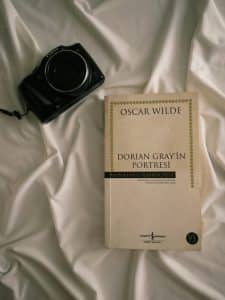
The Picture of Dorian Gray
By Oscar Wilde
The following is part of a series exploring classic books for people who always meant to read them, but never quite got around to it.
Introduction
Hello and welcome. Today, let’s step into the luminous, extravagant, and sometimes shadowy world of late Victorian London—a place where art, beauty, and reputation might matter just a bit more than what lies beneath the surface. We are about to unravel the mystery and moral questions inside one of the most enigmatic novels of the nineteenth century: The Picture of Dorian Gray by Oscar Wilde, first published in 1890.
Oscar Wilde, ever the wit and provocateur, crafted a story that still feels unsettlingly fresh. His only novel, The Picture of Dorian Gray invites us to follow a man whose face stays forever young, while his soul—and the painted portrait hidden away in a locked room—bear the burden of truth. Underneath its lush descriptions and clever conversation, this book asks: what would you give to remain beautiful forever? And what might it cost?
Why read or, in this case, listen to this story after all these years? Because it’s not only haunting and beautifully written, but it’s also quietly daring. Wilde’s novel explores the allure—and the price—of indulging every desire. It’s about the masks we wear and the consequences of ignoring what’s beneath. For anyone who has ever wondered what it means to age gracefully, to regret choices, or to question society’s obsession with beauty, Dorian Gray still has secrets to reveal.
And as we revisit these pages, here’s a little something to consider: If you could freeze a moment in time—your best moment—would you do it? And at what cost?
Story Summary
Let’s draw back the heavy curtain and step into London in the late 1800s. The air seems almost thick with perfume and possibility. We begin in the studio of the artist Basil Hallward—a gentle, somewhat nervous man, devoted to his craft, and perhaps even more taken with his current subject than he’d ever admit aloud. Basil is painting a portrait, and the model is a startlingly handsome young man named Dorian Gray.
On this particular day, the studio feels nearly sacred, a hush of concentration. But that peace is soon disrupted when Basil’s friend, Lord Henry Wotton, arrives. Lord Henry is the kind of man who seems both amused and cynical at everything. You can imagine his words trailing through the air, each sentence crafted like a jeweled dagger. Wilde himself once said, “The only way to get rid of a temptation is to yield to it.” Lord Henry embodies that spirit—devil’s advocate and philosopher, always ready to prod at someone’s conscience, or lack thereof.
Lord Henry quickly becomes fascinated by Dorian. In their first meeting, he launches into a speech about youth, pleasure, and the fleeting nature of beauty. He urges Dorian to savor every sensation, to seize life’s pleasures before age and decay ravage them. Dorian, still innocent and unguarded, listens as though hypnotized. Here is the moment, right at the beginning, where the seeds of tragedy are sown.
As Lord Henry speaks, something shifts in Dorian. For the first time, he feels the weight of his youth—and the dread of losing it. He gazes at Basil’s nearly finished portrait, realizing that while his painted likeness will stay beautiful, his own face must one day be marked by age. A sudden, reckless wish escapes him: “If it were I who was to be always young, and the picture that was to grow old! For that—for that—I would give everything!”
The room falls silent. Neither Basil nor Lord Henry truly believes a soul could be traded for a wish, but Dorian’s words hang in the air, thin and dangerous. Sometimes, in stories like these, it’s as if the universe is listening.
The portrait is completed. Basil, proud but oddly reluctant, gifts it to Dorian. Yet, on this very day, Dorian’s fate changes. Lord Henry becomes his mentor, drawing Dorian deeper into a philosophy of pleasure—art for art’s sake, beauty above all, conscience and morality brushed aside as relics of an older generation.
Life for Dorian quickly becomes dazzling and dizzying. Parties, operas, dinner with London’s witty and well-born. But underneath, there’s a new self-consciousness, the pressure of Lord Henry’s philosophy weighing on him. Dorian slips away from Basil’s earnest friendship, preferring Henry’s more seductive company.
One evening, Dorian meets Sibyl Vane—a radiant, naive actress performing Shakespeare in a shabby little theater. She is enchanting, her voice delicate, her talent undeniable in his eyes. For Dorian, it is instant, rapturous love. To him, Sibyl is Juliet, Ophelia, Desdemona—a symbol of unspoiled beauty and art. Their romance is swift and dreamy. Dorian visits her nightly, and she calls him “Prince Charming.”
Sibyl’s mother warns her to be cautious. As for her brother James—a rough, protective young man—he vows to hunt Dorian down if his sister’s heart is broken. But to Sibyl, Dorian represents the world she’s always longed for. He proposes marriage, and she accepts. Dorian feels buoyant, unstoppable, as if love itself might redeem him.
But love, at least in Dorian’s hands, proves fragile. One evening, Dorian brings Lord Henry and Basil to see Sibyl perform. That night, her acting is dreadful—flat, emotionless, mechanical. The audience jeers. Dorian is mortified, angry, and cruel. Confronting Sibyl backstage, he asks what happened. She explains that, now that she has known real love through Dorian, the pretend passions of the stage mean nothing to her. “Before I knew you, acting was the one reality of my life. You have made it unreal by revealing to me a reality greater than any acting can be.”
But Dorian, vain and shallow, cannot forgive her ruined performance. In a scene that feels painfully modern, he cuts her down, telling her their relationship is over. He leaves her weeping in the shadows.
Returning home, Dorian is restless. He glances at the portrait—the one he so admired—and startles. At first, he thinks it’s a trick of the light, but there is a subtle change. The face in the painting, his own perfect image, now has a faint sneer on its lips. Dorian’s wish, so recklessly made, has somehow come true. It is the portrait, not Dorian himself, that will age and reveal the marks of his soul. Dorian, standing in the flickering candlelight, is both frightened and fascinated. The picture becomes a secret mirror, showing consequences the world cannot see.
The next day, a shattering telegram arrives—Sibyl has taken her own life. Overcome with guilt, Dorian is nevertheless quickly comforted by Lord Henry, who reframes her death as a beautiful, artistic conclusion to a romance. Lord Henry’s callous words are chilling—art outlasts both joy and suffering; perhaps Sibyl’s love was always destined to be brief and tragic. Dorian’s grief hardens, and he buries his regret.
As the years pass, Dorian becomes a fixture of London society—admired for his looks, envied for his charm and generosity at parties. He dives deeper into a life of pleasure, experimentation, and moral ambiguity. Music, jewels, perfumes, religious artifacts—Dorian seeks beauty in everything, even as rumors circulate about his influence and behavior. Young men who associate with him often end up ruined.
Basil Hallward, alarmed by these murmurs, confronts Dorian. In a scene fraught with tension, he pleads with Dorian to explain himself. Basil, idolizing Dorian’s purity, cannot believe the gossip. “Sin is a thing that writes itself across a man’s face. It cannot be concealed.”
But Dorian, defiant and desperate, reveals his terrible secret. He leads Basil to the locked attic room where the portrait is hidden. Basil recoils at the sight. The picture, once vibrantly handsome, has become monstrous—cruel lines, bloodshot eyes, a hideous reflection of all Dorian’s choices. Basil realizes, with horror, that he somehow played a role in Dorian’s undoing, just by painting him. In a moment of blind panic, rage, or despair, Dorian seizes a knife and murders him.
The murder is brutal and silent. Dorian hides Basil’s body and blackmails an old friend, Alan Campbell, to dispose of the evidence using his knowledge of chemistry. Dorian’s descent is swift, without the slightest sign on his own ageless face. The portrait, however, grows ever more deformed—“an ever-present reminder of the death of his soul.”
From here, Dorian’s world grows colder and smaller. Fear and paranoia tighten their grip. He attends parties, keeps up appearances, but beneath the surface, he is haunted by Basil’s ghost, by Sibyl’s memory, and by the picture upstairs, which must never be seen.
Years go by. Lord Henry, still as witty as ever, remains a fixture but never seems to age like Dorian. He jokes, teases, and reassures—his influence ambiguous and insidious all at once. Yet with each passing year, it becomes harder to outrun the whispers and Dorian’s own conscience.
One night, as Dorian walks through a seedy quarter of London, he encounters James Vane, who has spent years searching for his sister’s “Prince Charming.” James recognizes Dorian, but is thrown off by his unchanging appearance—surely the man who ruined Sibyl would have aged by now? Dorian barely escapes with his life. James, believing he was mistaken, is later killed in a hunting accident, much to Dorian’s relief and shame.
At this point, Dorian tries, briefly, to reform. He even spares a young woman from his own cruel influence at a country inn. He tells himself this is proof he can change, that redemption might be possible. Yet when he checks the portrait, it’s only more grotesque—a leering, hypocritical smile. Doing one small good act is not enough to erase years of selfishness and cruelty. “Why had he made a record of his life? Why had he painted the portrait? He had become to himself a thing of terror and a dread.”
Unable to bear the burden any longer and desperate for freedom from his secret, Dorian resolves to destroy the portrait—the repository of his conscience and sins. He grabs the same knife that killed Basil and plunges it into the painting.
Upstairs, the servants hear a crashing sound. They break down the door and find a horrible, withered old man lying dead on the floor—a knife plunged in his heart. On the easel beside him stands the portrait, restored to its original beauty, the likeness of young Dorian Gray. Only by the rings on the dead man’s fingers do they realize it is Dorian himself. The face in death is marked with every sin, every year, every regret—the true cost finally made plain.
So ends the spellbinding story of Dorian Gray—a story of art and vanity, influence and consequence, and the relentless truth that time will always have the final word.
Reflections and Themes
Pausing now, it’s worth considering what Oscar Wilde was hoping readers might take away from Dorian’s fate. The novel dances between fantasy and harsh lesson, between luscious art for art’s sake and the moral costs of living only for pleasure. At its core, Dorian Gray warns us about vanity—about the dangers of idolizing beauty and youth, as if they are the only currencies worth having. Wilde’s elegant society is packed with smiles, witty jokes, and gleaming surfaces, but underneath, there’s a gnawing hollowness.
One of the novel’s most memorable lines comes from Lord Henry, whose daring philosophy sets so much in motion: “To cure the soul by means of the senses, and the senses by means of the soul!” The idea is tempting—the hope that new experiences can wash away pain, that pleasure itself might be enough. But Dorian’s life reveals the opposite: the more he chases delight, the more haunted he becomes. Each wish fulfilled leaves another emptiness in its wake.
Dorian’s inability to age, while painted as a kind of miracle early on, eventually makes him a monster—out of step with time, unable to connect, and lacking the wisdom that might have come with honest regret. Wilde seems to suggest that our faces and our hearts should change together, shaped by love, heartbreak, loss, and forgiveness. If we never face the consequences of our actions, we risk living only half a life.
There is also, woven through Wilde’s story, a quiet meditation on influence. Basil’s adoration of Dorian is pure, but Lord Henry’s influence is all clever suggestion and moral ambiguity. Dorian is impressionable, almost passive. In today’s language, you might describe him as someone who lets others decide his values. Wilde is cautioning us to choose our influences wisely, lest we wake up one day and find ourselves lost in someone else’s script.
The portrait, meanwhile, is an unforgettable symbol. It represents the hidden self—the part no one else sees, where our true selves accumulate, year after year. As Wilde puts it, “Each of us has Heaven and Hell in him, Basil,” reminding us that repression, denial, or running from our own mistakes will not erase them. The real challenge is to face what we’ve become and, if possible, make peace with ourselves, wrinkles and all.
For those reflecting later in life, these themes land with extra resonance. We live in an age obsessed with youth, with curated social media profiles and the same frantic idolization of beauty that Wilde skewered more than a century ago. The idea of a shortcut, a secret that will spare us from aging or regret, remains as tempting as ever. But the values of kindness, honesty, and the courage to change—those gifts seem more precious with each passing year.
What truly lasts? Not the face in the mirror, but the relationships we’ve nurtured, the growth we’ve embraced, the integrity we claim for ourselves. Wilde’s novel may be set in a gilded world, but its lessons remain universal, especially for anyone who has ever looked back, pondered mistakes, and dreamed of second chances.
As Dorian discovers too late, “There is no such thing as a good influence, Mr. Gray. All influence is immoral.” While we might argue the point with Lord Henry, Wilde’s warning rings clear: guard your heart, cherish your years, and let your portrait change along with you. That’s the truest beauty of all.
Closing
As we leave behind the haunted rooms and glittering salons of fin-de-siecle London, perhaps you find yourself thinking about the faces you’ve worn over the years—the triumphs and regrets, the changes felt but not always seen. Oscar Wilde’s The Picture of Dorian Gray gives us an enduring invitation: to examine what we value, to consider how we are shaped by time, and to wonder what our own hidden portrait might reveal.
Whether you feel nostalgic for lost youth or grateful for wisdom hard-won, Dorian’s story is a gentle reminder that the most important transformations happen on the inside. Beauty, after all, is not merely a trick of the light or a lucky drawing in a portrait. It is woven from kindness, empathy, and the courage to face ourselves anew, year after year.
Thank you for joining me in this exploration of Oscar Wilde’s only novel—a book that shimmers with both artifice and hard-earned truth. And so, I leave you with a question to ponder: If your life were captured in a single image, what story would it tell?
This has been The Book You Never Read — the story you always meant to read, now you have finally caught up.
About This Book
- Author description: Oscar Wilde (1854-1900) was an Irish playwright, poet, and novelist renowned for his wit, flamboyant style, and piercing social criticism.
- Source: The Picture of Dorian Gray by Oscar Wilde, available at https://www.gutenberg.org/ebooks/174