
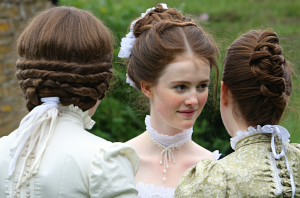
Pride and Prejudice
By Jane Austen
The following is part of a series exploring classic books for people who always meant to read them, but never quite got around to it.
Introduction
Hello, and welcome. Today, let’s step into the world of one of literature’s most beloved novels – Pride and Prejudice by Jane Austen. First published in 1813, this sparkling tale continues to charm and provoke over two centuries later. Whether you recognize the name from popular film adaptations or have always meant to discover why Jane Austen remains such a fixture on classics lists, you’re in exactly the right place.
Jane Austen was writing at the dawn of the nineteenth century, a time when England was bustling with change, but the rules of society – and particularly those circumscribing love and marriage – were rigid. Austen’s sharp wit and keen observations cut right to the contradictions of her world, and that is perhaps why her work feels so relevant today. Pride and Prejudice invites us into the lives of the Bennet family, a household of five daughters and their parents, living in the English countryside and anxiously watching the dance between reputation, romance, and the realities of inheritance.
But what is it about this story that still feels alive? For one, Austen brings us characters who are flawed, funny, yearning, and full of pride and misunderstandings – much like people today. The themes of love, class, and the courage to think for oneself remain powerful, touching on the things that bind us across generations. Whether or not you’ve spent much time in the world of regency England, the struggles and choices these characters face are uncannily familiar.
So, what does it mean to be proud? What does it mean to be prejudiced? How do you find happiness in a world set upon its own rituals? And most importantly: how do Elizabeth Bennet and Mr. Darcy move from mutual skepticism to one of the most celebrated romances in literature? Stay with me, and let’s take that journey together – exploring the family squabbles, the grand balls, and the very human ambitions at the heart of Pride and Prejudice.
Story Summary
Let’s begin with those famous opening lines, “It is a truth universally acknowledged, that a single man in possession of a good fortune, must be in want of a wife.” This sly declaration sets the perfect tone for the story, which centers around marriage, money, and the pursuit of happiness.
In the small rural town of Longbourn lives the Bennet family. There’s Mr. Bennet, a reserved and bookish gentleman known for his dry wit, and Mrs. Bennet—a woman of nervous energy whose mind is constantly on one subject: marrying off her five daughters before their father’s estate passes to an odious male cousin, Mr. Collins, due to a legal arrangement known as entailment. Their daughters – Jane, Elizabeth, Mary, Kitty, and Lydia – each approach life and love with their own blend of curiosity, caution, and youthful exuberance.
The calm of the Bennet household is disturbed by news that a wealthy bachelor, Mr. Bingley, has rented the stately Netherfield Park. For Mrs. Bennet, this is an opportunity that simply must not be missed. She urges her husband to call on Mr. Bingley, and, despite his initial reluctance, Mr. Bennet does so – the wheels of the story are set in motion.
Soon enough, Mr. Bingley arrives in the neighborhood with his stylish sisters and his enigmatic friend, Mr. Darcy – a man even richer than Bingley himself. The local assembly ball is the site of their first encounters, where Bingley’s cheerful manners make a fine impression, while Darcy’s pride is immediately noted by all. He is overheard refusing to dance with Elizabeth, declaring, “She is tolerable; but not handsome enough to tempt me.” That slight, delivered with the casual cruelty of someone unused to being challenged, stings Elizabeth. You can almost sense her resolve in that moment, a quiet determination to match him wit for wit.
Yet, if first impressions were all that mattered, there would be no story. With every neighborhood gathering and family visit, the characters are thrown together, shaped by their customs and preconceptions. Jane Bennet, the eldest daughter, soon becomes the center of Bingley’s attention. Her beauty and gentle manner captivate him, and it is clear to all – their affection seems a certainty. Elizabeth, on the other hand, is amused by Darcy’s reserve but unconvinced of his character.
The months that follow are a tapestry of village life and social maneuvering. When Jane is invited to Netherfield, a sudden storm and her mother’s scheming land her stranded there, caught ill. Elizabeth treks through mud and autumn rain to care for Jane, shocking the elegant Bingley sisters with her muddy skirts. Here, between sickbeds and drawing rooms, Elizabeth and Darcy observe one another in new circumstances. Darcy’s interest is piqued – there is something refreshing, even arresting, about a woman unconcerned with impressing anyone.
As winter deepens, the plot thickens. Enter Mr. Collins, the Bennet girls’ distant cousin and the future inheritor of Longbourn. His manners are ridiculous and self-important, yet Mrs. Bennet sees him as another opportunity – a marriage prospect for one of her daughters. Mr. Collins soon fixes on Elizabeth and proposes, in a manner both self-congratulatory and condescending. Elizabeth, to her mother’s great despair, refuses him, unwilling to exchange her freedom for a lifetime with a pompous fool.
The stream of visitors does not end there. George Wickham, a charming officer in the military, arrives in town. He shares with Elizabeth a tale that paints Darcy as deeply unjust – a man who, according to Wickham, deprived him of his rightful inheritance. These claims lodge in Elizabeth’s mind, fueling her dislike of Darcy and reinforcing the prejudices built from earlier slights.
Meanwhile, Jane faces her own disappointment. The Bingley party abruptly leaves Netherfield for London, leaving her bewildered and heartsick. Elizabeth suspects the influential Darcy and Bingley’s haughty sister played a role in discouraging the match, and she isn’t wrong.
Spring arrives, and Elizabeth travels to visit her dear friend Charlotte, who has just married Mr. Collins out of practical necessity. Their home, neighboring Rosings Park—the grand estate of the formidable Lady Catherine de Bourgh – brings Elizabeth into Darcy’s orbit once again. Darcy’s presence is both a surprise and a source of tension. Their conversations are sparring matches, each aware of the other’s intelligence but unable to escape the weight of earlier judgments.
It is here at Rosings, after a season of misunderstandings and mounting feelings, that Darcy shocks Elizabeth by proposing marriage. The proposal is not romantic; it is, as Austen describes, full of pride and astonishment that he should lower himself socially. “In vain I have struggled. It will not do. My feelings will not be repressed. You must allow me to tell you how ardently I admire and love you.” Yet these words land on Elizabeth’s aching grievances – his interference in Jane’s happiness, the apparent injustice to Wickham, his very manner – and she refuses him outright, delivering a rebuke that shakes them both.
Stung, Darcy later seeks Elizabeth out and hands her a letter. In this pivotal moment, the truths behind the tangled misunderstandings begin to surface. Darcy’s letter explains, in measured detail, his reasons for discouraging Bingley’s match with Jane: he doubted the seriousness of Jane’s affection and feared a connection to a family of questionable behavior. He also reveals the truth about Wickham: that he was offered the inheritance meant for him, but squandered it and attempted to elope with Darcy’s young sister. The revelation unsettles Elizabeth, forcing her to re-examine her own prejudices, her willingness to judge based on appearances and charm.
For the first time, Elizabeth is able to see Darcy – not as the haughty villain of Wickham’s tale, but as a man dealing with his own sense of duty, wounds, and desires. She reflects, “Till this moment, I never knew myself.” The story gently reminds us how error-prone our perceptions can be, how easily pride and prejudice cloud honest understanding.
The Bennet family now faces new trials. Lydia, the youngest and most reckless Bennet sister, elopes with Wickham, risking the reputation of the whole family. The country air is abuzz with gossip; Mrs. Bennet is nearly inconsolable, fearing the ruin of her remaining daughters’ prospects. Mr. Bennet blames himself for indulging Lydia’s wildness. In the background, Darcy moves quietly and decisively to secure the couple’s marriage, paying Wickham’s debts and restoring the Bennet family’s fragile honor – actions he doesn’t publicize, but which soon become known to Elizabeth.
Meanwhile, Mr. Bingley returns to Netherfield. Buoyed by Darcy’s encouragement, he proposes to Jane – at long last, their joy is secured. The household is again set abuzz, but for Elizabeth, there lingers a question – could there be hope for her and Darcy? She has seen him act with a new humility and generosity. She carries within her the knowledge of her own pride and error.
The conclusion approaches not in fireworks, but in a series of emotional reckonings. Lady Catherine de Bourgh, hearing rumors of a possible engagement between Darcy and Elizabeth, storms to Longbourn and confronts Elizabeth. She demands a promise never to accept Darcy, which Elizabeth, with characteristic resolve, refuses. This encounter speaks not only to Elizabeth’s courage but to her commitment to making her own choices, despite pressure from those who wield influence.
Finally, Darcy comes to Elizabeth again – humbled, transformed, and open-hearted. This time, his proposal is stripped of arrogance. He accepts her refusal could still stand, but he hopes she has changed her mind. Elizabeth, too, is honest – she has, indeed, come to love him. In one of the most celebrated reconciliation scenes in all of literature, misunderstandings are cleared away, and the truth of their feelings shines through.
In the aftermath, the couples settle into newly forged happiness. Jane and Bingley move to a nearby estate; Elizabeth and Darcy make their home at Pemberley, surrounded by friends and family. Even Mrs. Bennet, that eternal worrier, is finally content – her two eldest daughters safe and well-married, her family’s future secured.
As you can imagine, Austen weaves together not just romance and wit, but a bright tapestry of everyday moments: awkward dinners, casual walks along country lanes, gossip in drawing rooms, heartfelt letters passing between friends. Through it all, she crafts a portrait of people learning – sometimes painfully, sometimes joyfully – that happiness comes not from rigidly following society’s rules, but from the willingness to know and forgive both oneself and others. The witty dialogue and pointed observations – still quoted today – shine as reminders that life’s biggest lessons are often learned between misunderstandings and muddy walks.
Though set in an England of horse-drawn carriages and elaborate balls, Pride and Prejudice remains, at its heart, a story about the choices all of us make, the judgments we pass, and the courage needed to find love and understanding.
Reflections and Themes
If you step back for a moment and take in the world of Pride and Prejudice, what stands out isn’t just the romance between Elizabeth and Darcy – it’s the deeper current running beneath every conversation and decision. Austen’s novel is celebrated for its sharp wit, but it is also deeply wise. The title says so much: pride – of birth, of status, of personal conviction – and prejudice – those snap judgments we make about others, often at our own peril. Their subtle interplay can lead us down wrong paths, but also offers the potential for growth, if we’re willing to see clearly.
Elizabeth Bennet is remarkable not because she starts out wise, but because she learns. She moves from quick judgment – her certainty that Darcy is arrogant and cruel, her belief in Wickham’s charm – to slow, hard-won understanding. Darcy, too, must change. He must reckon with the way his pride has limited his kindness, how his rigid ideas about social class have led him to interfere in the happiness of others. Both characters show us that humility and self-reflection are – they have to be – at the heart of real happiness.
The story is also a gentle but unyielding critique of the world it’s set in. In the early 1800s, a woman’s security depended almost entirely on marriage. The Bennet sisters’ future is uncertain because of a legal system stacked against them, where inheritance goes automatically to male heirs. You can hear the anxiety in lines like, “I am not romantic, you know. I never was. I ask only a comfortable home; and considering Mr. Collins’s character, connections, and situation in life, I am convinced that my chance of happiness with him is as fair as most people can boast on entering the marriage state.” Charlotte Lucas, Elizabeth’s friend, voices a pragmatic acceptance that for many women, marriage wasn’t about love—it was about survival. Austen’s wit is gentle, her criticism sharp, but she never lets us forget how precarious security could be for women in her time.
There’s real affection in the way Austen draws even her “foolish” characters – Mrs. Bennet, with her comic flights and endless nerves; Mr. Collins, pompous yet somehow endearing; even Lydia, wayward and impulsive. Their flaws are human, their choices shaped by anxiety and hope, not malice. This empathy is why the novel endures. Austen looks at their foibles and offers not just mockery, but understanding – reminding us that, more often than not, we’re all muddling through together.
For those looking back on a life of relationships – family raised, careers managed, friendships held or lost – Austen’s insights ring true. The dance of pride and misunderstanding, the slow work of apology and forgiveness, the finding of joy not in sudden romantic gestures but in kindness and quiet partnership – these threads remain just as relevant. Reflecting on the story, you might ask yourself, where has pride gotten in the way for me? When have I misjudged another, or grown by changing my mind?
In one of the novel’s most memorable admissions, Elizabeth confesses, “I, who have prided myself on my discernment! – I, who have valued myself on my abilities!… Had I been in love, I could not have been more wretchedly blind. But vanity, not love, has been my folly. Satisfied with my own vanity and pleased with Wickham’s attentions, I was proud of my own discernment.” It’s an admission of vulnerability and growth – something we can all relate to, recognizing, perhaps with a rueful smile, that the world is rarely as simple as we first judge it to be.
Ultimately, Pride and Prejudice reminds us that while society may urge us toward certain paths, choosing to look past early judgments and truly listen – to ourselves, to those we care for – can open doors to happiness we might never have imagined. More than a love story, it’s a celebration of the courage to change and the quiet power of learning to see others, and ourselves, without pride or prejudice.
Closing
And so, we come to the end of our journey with the Bennet family – a journey full of wit, surprise, and discovery. Pride and Prejudice lingers not because every character is wise from the start, but because they change, falter, and finally come to know themselves and each other. Jane Austen shows us that life’s real richness comes not from matching society’s expectations, but from growing past our own misunderstandings and opening our hearts to others.
For anyone who ever wondered why this novel has persisted for more than two hundred years, the answer is clear: its truths are timeless. The questions it asks – about pride, forgiveness, connection – still shape our lives, no matter where, or when, we find ourselves.
As you reflect on Elizabeth and Darcy, on their tangled path to happiness, you might wonder: How have your views of others changed, perhaps softening with time, inviting new joys into your life? And, just perhaps, how does seeing yourself with kindness – faults and all – open new doors in ways you never expected?
This has been The Book You Never Read — the story you always meant to read, now finally caught up.
About This Book
- Author description: Jane Austen was an English novelist known for her piercing social commentary, witty dialogue, and enduring insights into love and manners in Georgian England.
- Source: Public domain text from Project Gutenberg — Pride and Prejudice by Jane Austen, available at https://www.gutenberg.org/ebooks/1342